High-end interior design relies heavily on display solutions that protect valuable items while enhancing their visual appeal. For procurement managers, interior designers, and retail distributors, sourcing these specialized pieces requires deep attention to material quality and structural integrity. The market for curio furniture wholesale has expanded beyond traditional residential designs to include highly customized, modern vitrines used in hospitality lobbies, luxury retail boutiques, and upscale residential developments. Partnering with a manufacturer like Essent Home ensures that these requirements are met with precision and longevity.
A curio cabinet is not merely a storage unit; it is an architectural frame designed to control light, dust, and security. Sourcing these units at scale involves navigating several material challenges, shipping hazards, and engineering requirements. Buyers must evaluate manufacturers based on their engineering capabilities rather than surface-level aesthetics alone.
Commercial Sourcing Challenges in Glass Display Cabinets
Sourcing display cabinets in bulk presents specific challenges that do not apply to standard case goods. Because glass is the primary material component, structural safety and transit durability are major concerns for commercial buyers.
Structural Wobble and Load Bearing: Tall, narrow display cabinets have high centers of gravity. Poorly engineered frames can sway or tilt under load, posing significant safety hazards in high-traffic commercial environments.
Glass Breakage and Liability: Standard float glass is highly susceptible to impact damage. In commercial spaces such as hotels or retail stores, glass breakage can lead to liability issues, making tempered or laminated safety glass mandatory.
Dust Infiltration: Poorly fitted cabinet doors allow dust to enter, which increases maintenance costs for retail displays and hospitality exhibits. Standard residential cabinets often lack the tight tolerances required to keep dust out over long periods.
Inefficient Lighting Integration: Improperly integrated lighting can generate excessive heat inside the cabinet, which can damage delicate items such as leather goods, rare books, or historical artifacts. Visible wiring also detracts from the clean, high-end look required for luxury displays.
Addressing these challenges requires a manufacturing partner with advanced joinery techniques, high-precision CNC machinery, and a deep understanding of structural glass engineering.
Engineering Standards for Premium Curio Manufacturing
When evaluating options for curio furniture wholesale, understanding the exact specifications of the glass, frame, and hardware is paramount. High-end display cabinets are distinguished by their structural engineering and material choices.
Glass Engineering and Clarity
The choice of glass determines both the safety and the visual clarity of the cabinet. Premium manufacturers utilize low-iron tempered glass rather than standard clear glass. Standard clear glass contains iron impurities that give the edges a distinct green tint, which distorts the natural color of the displayed items. Low-iron glass provides maximum light transmission and neutral color rendition.
All glass panels must undergo tempering, a thermal toughening process that increases strength by four to five times compared to annealed glass. Edge finishing is equally key. Beveled, flat-polished, or mitered edges prevent chipping and allow for seamless UV-bonded glass joints in frameless curio designs.
Frame Construction: Solid Hardwoods vs. High-Density Veneered Panels
The structural skeleton of the cabinet must resist warping, especially when shipped across different climate zones. Premium cabinets utilize a combination of solid hardwoods and high-density engineered cores covered in thick natural wood veneers.
Solid hardwoods such as American ash, walnut, or white oak are ideal for structural posts, door frames, and carved details due to their strength and density. For large flat panels, high-density fiberboard (HDF) with a 0.6mm-thick natural wood veneer is preferred because it remains stable under changing humidity levels, preventing the warping that can cause glass doors to bind or gaps to appear.
Metal Components and Finish Durability
Metal framing and trim elements add structural reinforcement and modern styling to contemporary vitrines. Stainless steel (Grade 304) and solid brass are the industry standards for high-end curio cabinets. Stainless steel offers high tensile strength and rust resistance, while brass provides a classic luxury aesthetic.
To ensure finish longevity, manufacturers use Physical Vapor Deposition (PVD) coating or anodizing rather than simple wet painting. PVD coating provides a hard, wear-resistant surface that does not tarnish, scratch, or peel over time, even under frequent cleaning in commercial spaces.
Application Scenarios for B2B Procurement
Curio cabinets serve different purposes depending on the commercial environment. Understanding these applications helps buyers specify the correct design and construction standards for their projects.
Luxury Hospitality Environments
In luxury hotels, curio cabinets are frequently placed in lobbies, libraries, and executive suites to display local art, historical artifacts, or high-end retail merchandise. These environments require double-sided or 360-degree viewing cabinets that act as spatial dividers. High durability, integrated security locks, and warm, atmospheric lighting are standard requirements for these high-traffic areas.
High-End Retail Boutiques
Retail environments demand display cases that draw attention directly to the merchandise. Here, frameless UV-bonded glass curio cabinets are preferred because they minimize visual barriers. Integrated lighting must have a High Color Rendering Index (CRI > 90) to display jewelry, watches, or designer accessories accurately. Electronic or smart lock integration is often requested for rapid employee access.
Bespoke Residential Developments
For luxury residential developments, built-in or freestanding curio cabinets are designed to blend seamlessly with custom millwork. Designers look for custom sizing, veneer matching (such as book-matching or slip-matching), and integrated soft-closing hardware to match the residential aesthetic.
Quality Assurance and Regulatory Compliance
Implementing rigorous quality control measures is a differentiator in the curio furniture wholesale market. Global buyers require assurance that the furniture meets international safety and performance standards.
A reliable manufacturer conducts several quality checks during the production process:
Moisture Content Control: Timber is kiln-dried to a moisture content of 6% to 9% to prevent shrinkage, cracking, or warping during international shipping and in dry, air-conditioned environments.
Glass Certification: Glass panels must comply with international safety standards, including SGCC (Safety Glass Certification Council) for the North American market and EN 12150-1 for the European market.
Load-Capacity Testing: Glass shelves are subjected to static load testing to determine their maximum weight capacity, ensuring they can support heavy items without bowing or fracturing.
Hardware Cycle Testing: Door hinges and drawer slides are tested for up to 50,000 open-and-close cycles to guarantee smooth operation under continuous commercial use.
Logistics, Packaging, and Global Distribution
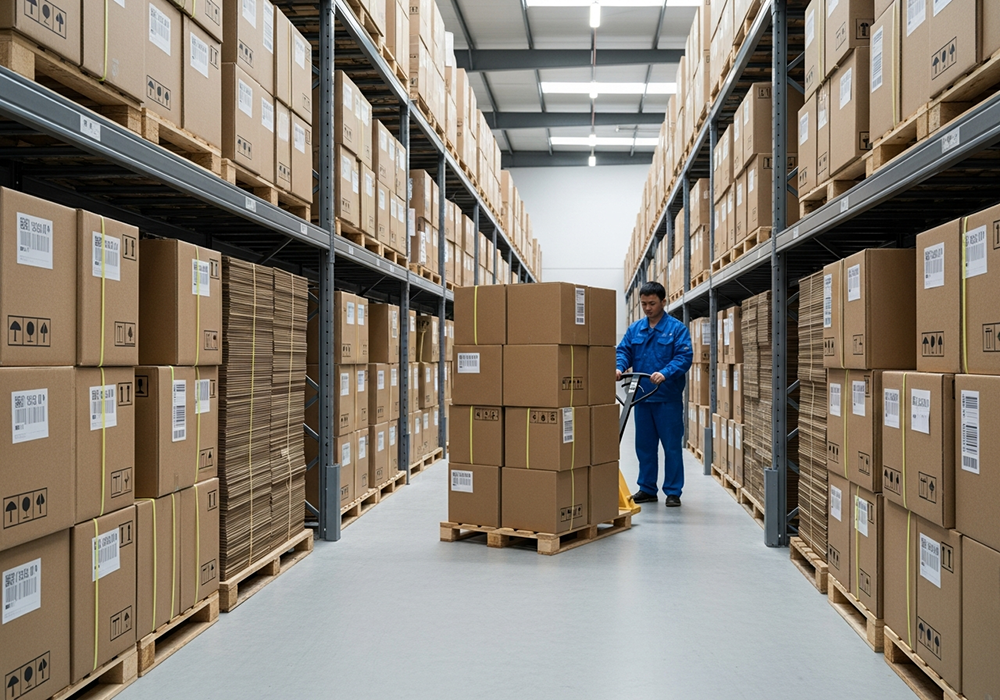
The primary concern for international B2B buyers is ensuring that fragile glass cabinets arrive intact. High damage rates during transit can delay project timelines and erode profit margins.
Shipment damage is minimized through careful engineering of packaging systems. Premium manufacturers utilize ISTA 3A-compliant packaging, which includes:
High-density expanded polyethylene (EPE) foam corners to absorb shock.
Double-wall corrugated fiberboard cartons with high burst strength.
Molded internal pulp trays to secure glass panels individually, preventing glass-on-glass contact.
Fumigated solid wood crates or heavy-duty honeycomb cardboard pallets for Less than Container Load (LCL) shipping.
Buyers can choose between fully assembled shipping or Knocked-Down (KD) packaging. While KD packaging reduces shipping volume and freight costs, it increases on-site assembly time and labor costs. Pre-assembled shipping guarantees factory-level structural integrity and is often preferred for high-end hospitality installations where on-site setup times are limited.
Partnering with Essent Home for Custom Requirements
Distributors seeking reliable partners for curio furniture wholesale often require bespoke modifications. Essent Home offers specialized OEM and ODM manufacturing services, turning conceptual drawings into structurally sound physical products.
The custom manufacturing process follows a structured path to ensure design accuracy and structural integrity:
Design Evaluation and Shop Drawings: The engineering team reviews client sketches or CAD files, assessing structural stability, glass-to-frame ratios, and hardware placement.
Material Selection: Clients can choose from a wide range of premium veneers, solid woods, anodized metal finishes, and glass specifications.
Prototyping: A full-scale prototype is constructed to verify the design, test lighting integration, and confirm structural load-bearing capacity before mass production begins.
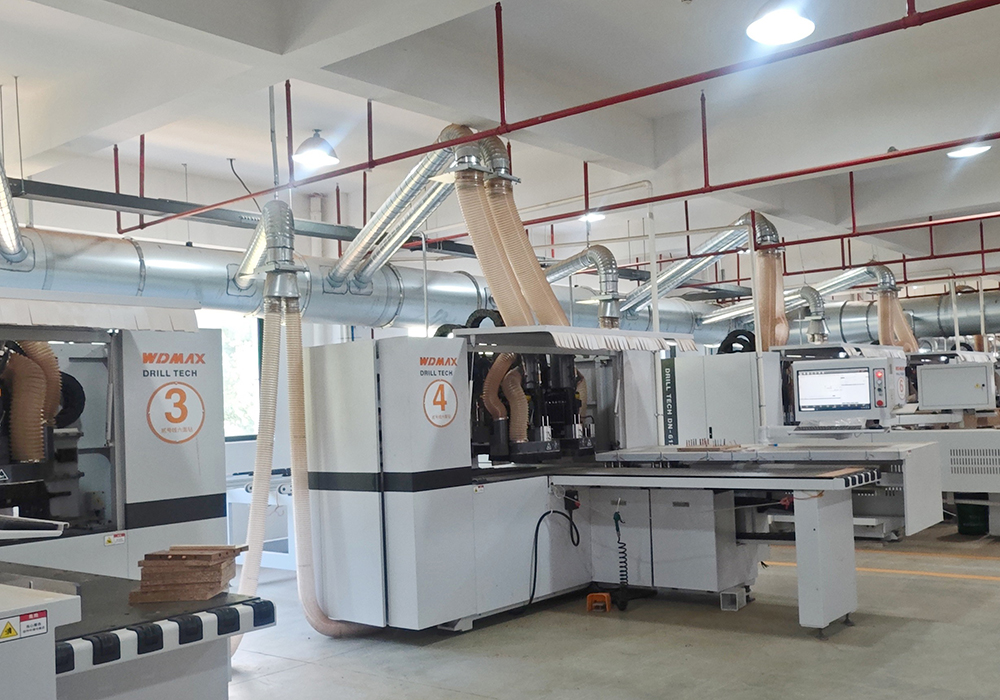
Bulk Manufacturing: Production is carried out using automated CNC machinery for precise joinery tolerances, followed by hand-finishing by experienced cabinetmakers.
Submit Your Project Specifications
We work closely with procurement officers, hospitality designers, and commercial distributors to deliver custom display solutions that meet exact project specifications. To discuss your project requirements, request material samples, or obtain a comprehensive catalog, please contact Essent Home today. Our engineering team is ready to assist you from initial shop drawings through to final delivery, ensuring your project is completed with precision and care.
Frequently Asked Questions
Q1: What are the primary advantages of low-iron glass in display cabinets?
A1: Low-iron glass contains significantly less iron oxide than standard float glass. This reduces the green tint characteristic of typical glass panels, providing maximum light transmission and clarity. For high-end display purposes, this ensures that the colors of the displayed items are rendered accurately without any color distortion.
Q2: How do you address dust prevention in large-volume production?
A2: To prevent dust from entering the cabinets, we manufacture door frames to precise tolerances (within 1mm of variance) and integrate continuous dust-proof silicone seals or high-density mohair weather stripping along the door perimeters. Magnetic catches or soft-closing self-latching hinges are also used to maintain a consistent seal when the doors are closed.
Q3: What wood moisture level is maintained for international export?
A3: All timber used in our manufacturing process is kiln-dried to a moisture content of 6% to 9%. This specific range is chosen because it matches the typical equilibrium moisture content of indoor environments in most destination countries, preventing the wood from warping, cracking, or swelling when shipped across different climates.
Q4: Can electronic or RFID locking systems be integrated into these wholesale cabinets?
A4: Yes, electronic, biometric, or RFID locking systems can be integrated during the manufacturing process. This is a common requirement for high-end retail boutique displays, where security is paramount. The lock mechanisms are hidden within the wooden or metal frames to maintain a clean aesthetic.
Q5: What are the packaging standards used for curio furniture wholesale shipments?
A5: We pack our products in compliance with ISTA 3A standards. Each unit is wrapped in high-density EPE foam, and glass panels are secured individually in custom-molded pulp inserts. The outer packaging consists of double-walled corrugated cartons reinforced with corner protectors, and we utilize ISPM-15 certified wooden crates for LCL sea freight to prevent forklift puncture damage.